DR GPT™ LabsOBER Observation
Blog

What your MOON letter really means

A quiet hospital observation room in soft morning light with a made bed, a family recliner with a folded blanket and a water cup on the bedside table.

By , board-certified emergency physician · November 10, 2026

Families often show me a form during a hospital stay and ask, "What did we just sign?" Very often it is the Medicare Outpatient Observation Notice, called the MOON. It looks like routine paperwork. It is not.

The one sentence that matters

The MOON tells you that you are an outpatient under observation, not an admitted inpatient, even if you are in a hospital bed and stay overnight.

Why that changes things

  • Your bill. Observation is outpatient care. Under Original Medicare, that usually means Part B, where you can owe a copay for each service instead of one inpatient deductible.
  • Your daily pills. Medicines you normally take yourself may not be covered while you are under observation, and the hospital may bill you for them. Ask whether you can use your own.
  • Rehab. Medicare usually covers skilled nursing facility care only after 3 days in a row as an inpatient. Observation days do not count toward those 3 days. This is the surprise that hurts families most.

When you get it

Hospitals must give the MOON to people with Medicare, including Medicare Advantage, who receive observation services for more than 24 hours. It must arrive no later than 36 hours after observation starts, or sooner if you are going home. Someone should explain it to you out loud.

Signing it

Signing shows that you received the notice. It does not mean you agree with your status. If you refuse to sign, staff note that and you still get a copy.

Three questions to ask today

  1. Why am I under observation and not admitted, and what would change that?
  2. If I need rehab after this, will my days here count?
  3. Can I speak with the case manager about my discharge plan?

Keep your copy with your discharge papers. For Medicare questions, call 1-800-MEDICARE.

Watch: DR GPT 2026 speaker reel (DR GPT™ on YouTube)

Talk: AI in the ER

Bring this talk to your team

What emergency medicine teaches every healthcare team about AI, from the author of AI in Emergency Medicine (Wiley).

Bring this talk to your team

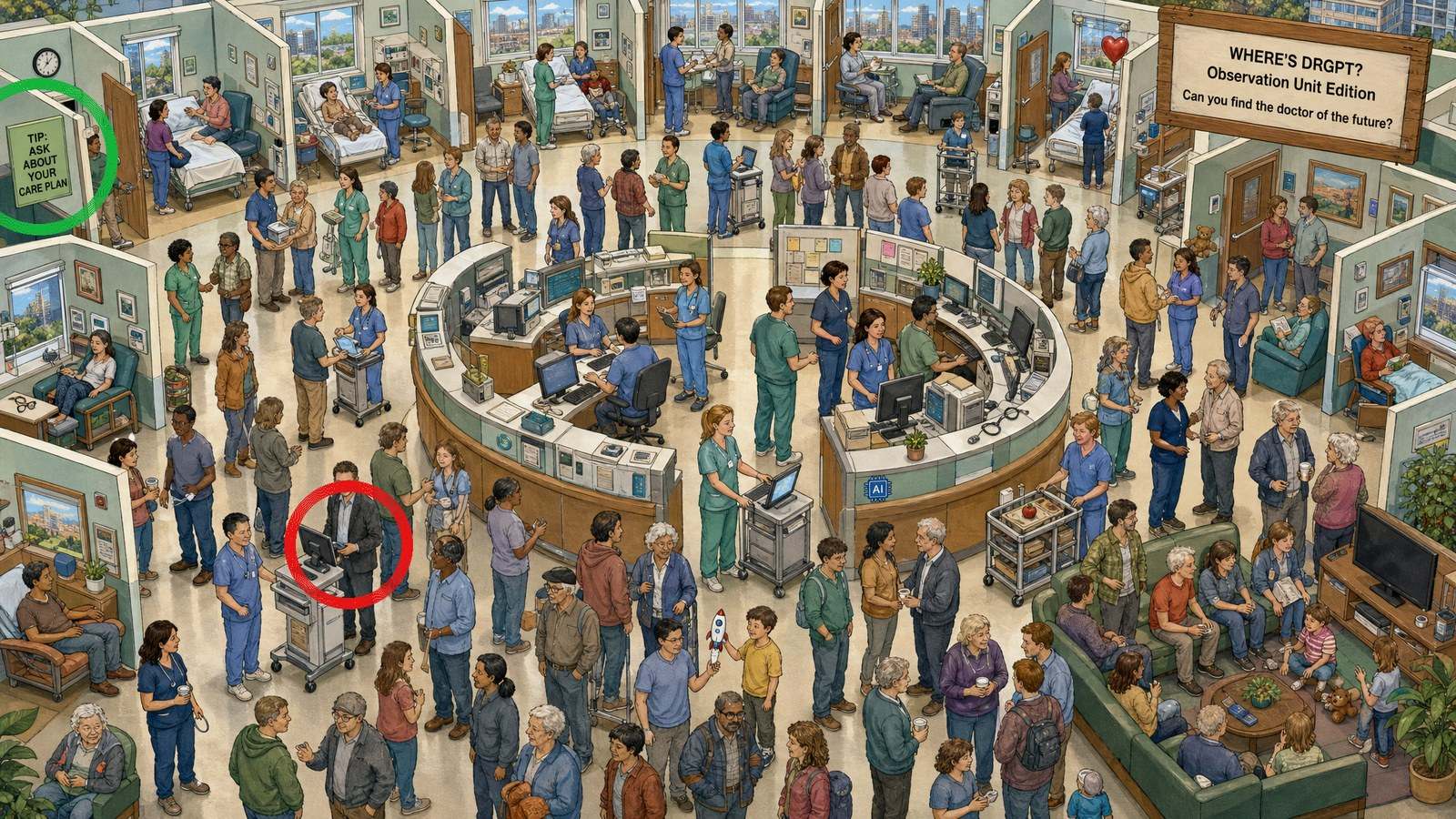
Can you find DrGPT?

Hand-drawn hidden-object illustration of a calm hospital observation unit: a round nurses station, private rooms with recliners, rolling computer carts and visitors. A sign reads "Where's DrGPT? Observation Unit Edition" and a green poster reads "Tip: Ask about your care plan."

Clue: I'm in the hallway, right next to a rolling computer cart.

Show the answerThe same illustration with a red circle around DrGPT and a green circle around the tip sign.

Lower left, beside the rolling computer cart below the nurses station, in a charcoal blazer with a tablet.

Sources

Education only, not medical advice. In an emergency, call 911.

More from the blog

Common questions

Can I appeal observation status?

Ask the case manager about your appeal rights and call 1-800-MEDICARE. Rules depend on your coverage and situation.

Does the MOON apply to Medicare Advantage?

Yes. CMS applies the MOON to both Original Medicare and Medicare Advantage. Your plan sets what you pay, so call the number on your card.

Written and medically reviewed by , board-certified emergency physician. Last reviewed October 25, 2026.

About the author.
OB

Share this page

Point a phone camera at the code, or send the link to someone who needs it.

Download QR code

Post it: LinkedInFacebookXWhatsAppEmail

Free branded QR codes by QR Medic, a DR GPT™ Labs tool.

Book Harvey to speak. I speak on AI in healthcare.
Harvey Castro, MD, MBA: board-certified emergency physician, 6x TEDx speaker, keynotes in English and Spanish.
Book Harvey to speak
Get my free DR GPT™ newsletter
Plain-language health and AI updates from an ER physician, about twice a week. New free tools land there first.
Subscribe free